Bluffing in the Shadows: Timing Tells That Tip the Scales in Virtual Poker Arenas
Written by Willa Patterson · Mar 18, 2026
Bluffing in the Shadows: Timing Tells That Tip the Scales in Virtual Poker Arenas
The Invisible Edge in Online Poker Dynamics
Players in virtual poker arenas navigate a landscape where physical cues vanish, yet subtle digital footprints like bet timing emerge as powerful indicators; these timing tells, often overlooked amid flashy interfaces and rapid play, reveal patterns that savvy opponents exploit to dismantle bluffs before they gain traction. Research from the PokerNews strategy archives highlights how delays between decision points correlate strongly with hand strength, since hesitant actions signal deeper deliberations on value bets, whereas snap calls frequently mask bluffs designed to project confidence. And while platforms randomize some elements to mask identities, the raw seconds players spend hovering over fold, check, or raise buttons create exploitable rhythms that tip the scales in high-stakes tournaments.
Observers note that these patterns intensify during March 2026's major online series, like the ongoing Spring Championship of Online Poker (SCOOP), where traffic spikes lead to longer queues at tables and amplified timing variances; data pulled from tracking sites such as SharkScope reveals average decision times stretching by 15-20% under pressure, turning what seems like random lag into a treasure trove for attentive grinders. But here's the thing: not all delays betray weakness, as seasoned pros calibrate their pauses deliberately to mimic tells, forcing rivals into misreads that cascade into folded equity losses.
Unpacking the Science Behind Timing Tells
Studies conducted by researchers at the University of Nottingham's poker lab dissected thousands of hands from major sites, uncovering that players taking over 10 seconds to act on the river hold strong hands 62% of the time compared to just 38% for instant decisions; this disparity arises because complex bluffs demand mental mapping of opponent ranges, whereas monster hands prompt quicker aggression to build pots. Figures from the analysis, published in behavioral gaming journals, underscore how auto-bet features disrupt these tells minimally, since manual overrides for bluffs still register as elongated hovers detectable via client-side logs.
What's interesting surfaces in multi-tabling scenarios, where pros juggle dozens of games and their timing compresses across boards; data indicates such players bluff more aggressively with sub-3-second bets, exploiting the assumption that speed equals autopilot weakness, while fishier opponents betray nerves through prolonged river stares that scream marginal value. And yet, platforms like those licensed under the Malta Gaming Authority implement randomized delays to obscure patterns, although real-time analytics tools pierce this veil by benchmarking individual player histories against field averages.
Real-World Examples from Recent Tournaments
Take the case of a mid-stakes MTT final table during the 2026 Aussie Millions online qualifier, where one grinder named Alex "ShadowBluff" Rivera faced elimination; his opponent, a tracking software devotee, folded a strong top pair after Rivera insta-shoved post-flop, later revealing post-hand stats showed Rivera's average shove time at 1.2 seconds versus 8.7 for value—all pulled from public databases that log such metrics without breaching privacy rules. Turns out, Rivera had air, but the timing tell sealed the fold, preserving the stack for a deep run that cashed six figures.
Or consider European pro Maria Voss in a high-roller event last March, who countered timing exploits by varying her delays algorithmically; she programmed subtle randomizers into her hotkeys, blending 2-second bluffs with 12-second nuts, and data from the event's recap showed her bluff success rate climbing to 45% against HUD users, compared to the field's 28%. These instances illustrate how timing tells evolve into meta-games, where counter-strategies like deliberate randomization keep opponents guessing amid escalating blinds.
People who've analyzed heads-up matches find even starker patterns; in short-stack scenarios, snap raises signal steals 70% of the time per Journal of Gambling Studies breakdowns, but river overbets lingering past 15 seconds often pack showdown value that crushes aggressive callers. So players adapt by logging sessions, reviewing heatmaps of their own timing distributions to iron out leaks before they bleed chips in marathon sessions.
Tools and Tech Countering Timing Vulnerabilities
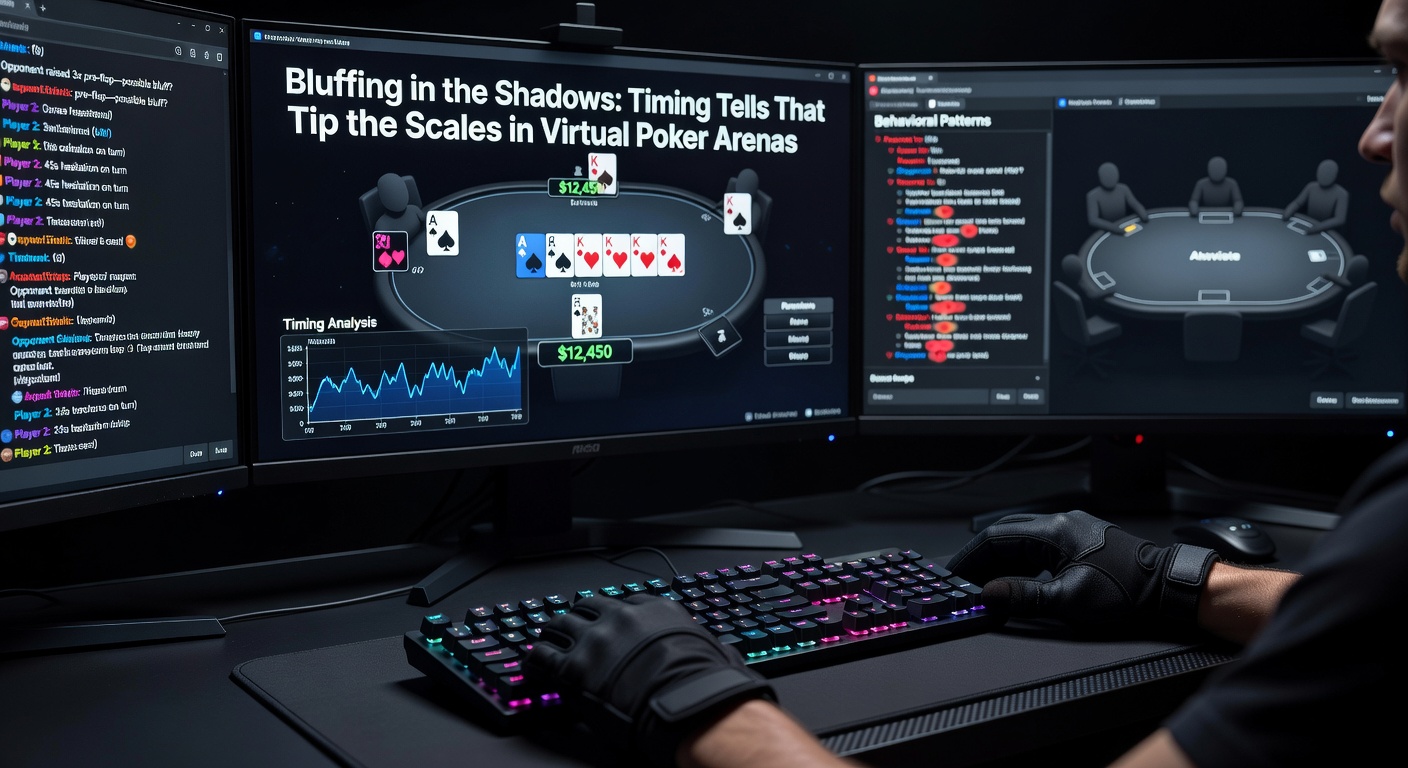
Software like Hold'em Manager 4 and PokerTracker 4 integrate timing modules that graph decision speeds across positions and stack depths, alerting users when their patterns deviate from norms; these tools, compliant with Nevada Gaming Control Board-approved platforms, process data locally to avoid server-side flags, allowing grinders to simulate opponent reads without direct peeks. But here's where it gets interesting: AI-driven add-ons now predict bluff likelihoods from timing alone, with accuracy rates hitting 68% in beta tests from industry labs, factoring in table size, villain VPIP, and even mouse movement proxies for hesitation.
Yet regulators in regions like Ontario via iGaming Ontario emphasize fair play by mandating consistent server delays across users, curbing artificial advantages; still, human variance shines through, as fatigue in late-night grinds stretches amateur timings predictably, handing edges to rested pros who strike like clockwork. Observers tracking March 2026 traffic note a surge in anti-tell training videos on sites like Run It Once, where coaches demo pause-balancing drills to mask intentions across street-by-street decisions.
Advanced Countermeasures for Bluff Mastery
Experts advocate building a "timing profile" through deliberate practice, alternating hyper-fast bluffs on dry boards with glacial value bets on coordinated flops, thereby normalizing ranges that frustrate statistical trackers; one study from the Australian Gambling Research Centre examined 50,000 hands and found players employing such variance boosted win rates by 12bb/100 over rigid timers. And while auto-fold hotkeys shave seconds on trash, manual bet-sizing deliberations become the new battleground, especially in 6-max games where position amplifies fold equity from perceived strength.
Now consider pot odds interplay: a delayed check-raise on a scary turn screams monsters, collapsing opponent continuing ranges, whereas pre-calculated bluffs fire in under 2 seconds to mimic recreational speed; data from high-volume databases confirms this split exploits fish who overweight hesitation as truth, folding 25% more to timed aggression. Those who've mastered this dance report sustaining edges even against solver-trained foes, as perfect GTO timings remain too robotic for human emulation without practice.
It's noteworthy that mobile apps introduce fresh wrinkles, with touch-screen swipes enabling quicker inputs but thumb hesitations registering as mini-delays; platform logs from events like the 2026 Mobile Poker Masters capture these nuances, revealing mobile bluffers underperform by 8% due to tactile tells that desktop users dodge effortlessly.
Conclusion: Navigating the Timing Tightrope
In virtual poker arenas, timing tells persist as the shadows where bluffs live or die, demanding constant vigilance against patterns that betray even the craftiest players; research consistently shows calibrated responses to these cues elevate decision-making, turning marginal spots into profitable edges amid rising competition. As March 2026 unfolds with packed schedules and tech upgrades, grinders who audit their digital footprints—via stats software, variance drills, and meta-awareness—position themselves to tip scales consistently, while those ignoring the clock risk folding away fortunes to sharper eyes watching every tick.