Changes in Player Tactics During Phased Online Card Tournaments
Written by Willa Patterson · Jun 14, 2026

Changes in Player Tactics During Phased Online Card Tournaments
Multi-stage competitive card events hosted online feature structured progression through distinct phases where participants adjust their approaches based on stack sizes, opponent behaviors, and payout structures. Data from industry reports indicate that players in these formats often begin with measured aggression in opening rounds before transitioning to more calculated risks as fields narrow. Research from the University of Nevada's gaming studies program shows these adaptations occur consistently across platforms that host thousands of entrants weekly.
Initial Phase Dynamics
Early stages in these events typically reward preservation of chips while accumulating small edges through selective aggression. Participants monitor table compositions and avoid confrontations with larger stacks unless premium holdings justify the commitment. Observers note that software tracking tools provide real-time data on fold frequencies, which influences decisions during this period when blinds remain low relative to starting stacks. And players who study historical hand data from similar events tend to tighten their ranges until the first significant pay jump approaches.
Mid-Event Adjustments
As tournaments advance into middle stages, stack pressure increases and the average player count per table drops. This shift prompts many to expand their opening ranges while incorporating more post-flop maneuvers like continuation betting at higher frequencies. Figures from Canadian regulatory analyses reveal participation spikes during evening hours in June 2026 coincided with these tactical expansions, particularly in events lasting four to six hours. What's interesting is how independent chip model calculations guide these moves, helping competitors weigh survival against accumulation when antes enter play.
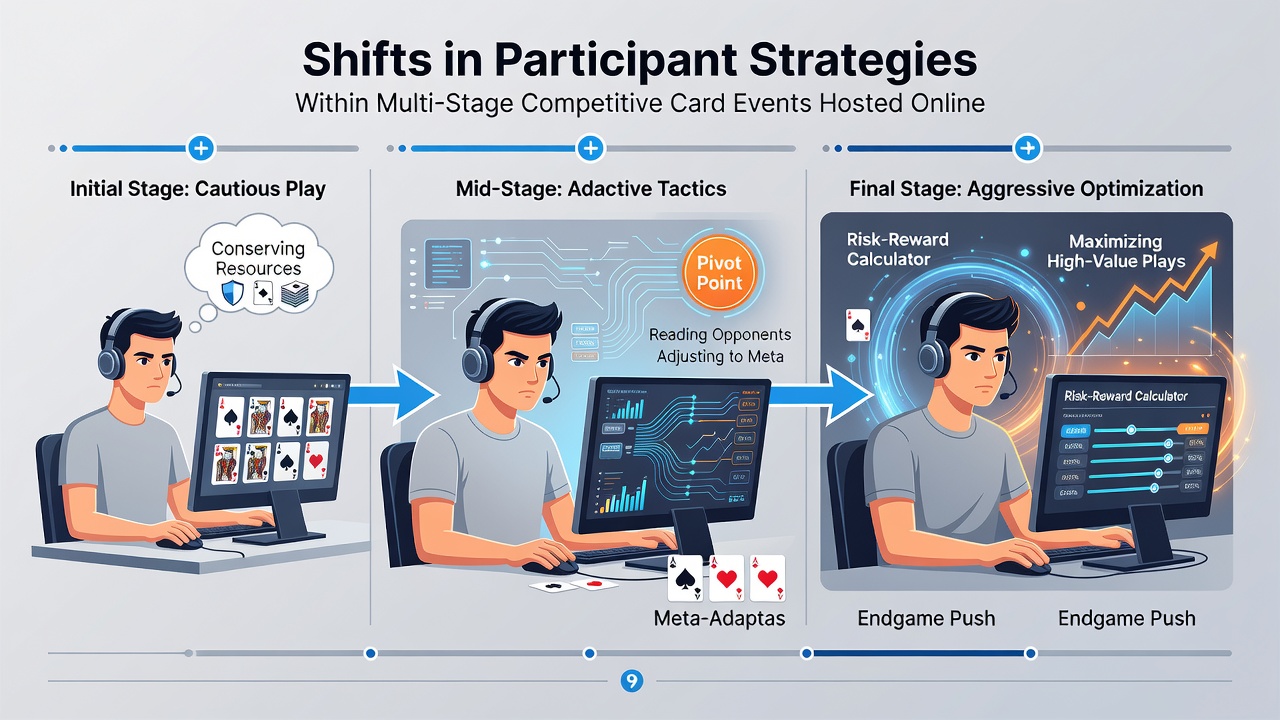
Bluffing frequencies rise during this window because reduced field sizes allow for better reads on remaining opponents. Experts have observed that those who track opponent tendencies through database software gain edges by identifying spots where fold equity outweighs actual hand strength. But here's the thing: these adjustments require constant recalibration as new players arrive from other tables through re-entries or consolidations.
Late Stage and Final Table Shifts
Final stages demand the sharpest pivots because payout ladders steepen dramatically and ICM pressure alters optimal play. Short stacks push all-in more frequently with wider ranges while medium stacks protect their positions to reach better pay positions. Research indicates that aggression metrics climb by 30 to 40 percent once the field reaches the final two tables, according to aggregated platform statistics shared by European gaming associations. Players who reached these points often cite prior experience with bubble dynamics as key to timing their moves correctly.
External Influences on Strategy Evolution
Platform features such as time bank systems and multi-tabling options further shape how strategies develop across stages. Participants who handle multiple events simultaneously prioritize quicker decisions early on before focusing intensely on single tables later. Regulatory frameworks in various jurisdictions affect player pools and game availability, which in turn impacts the prevalence of certain tactics. A report from Australia's gambling research center highlights how regional differences in event structures lead to measurable variations in aggression patterns during comparable phases.
Conclusion
Strategy shifts in multi-stage online card events reflect responses to changing variables like stack depths, table dynamics, and payout implications. Data continues to show these patterns hold across different platforms and player demographics, with adaptations becoming more pronounced as events progress toward their conclusions. Continued analysis of hand histories and participation trends supports deeper understanding of how competitors navigate these formats over time.