Changes in Virtual Card Game User Profiles After Global Championship Competitions
Written by Zoe Flores · Aug 4, 2026
Changes in Virtual Card Game User Profiles After Global Championship Competitions
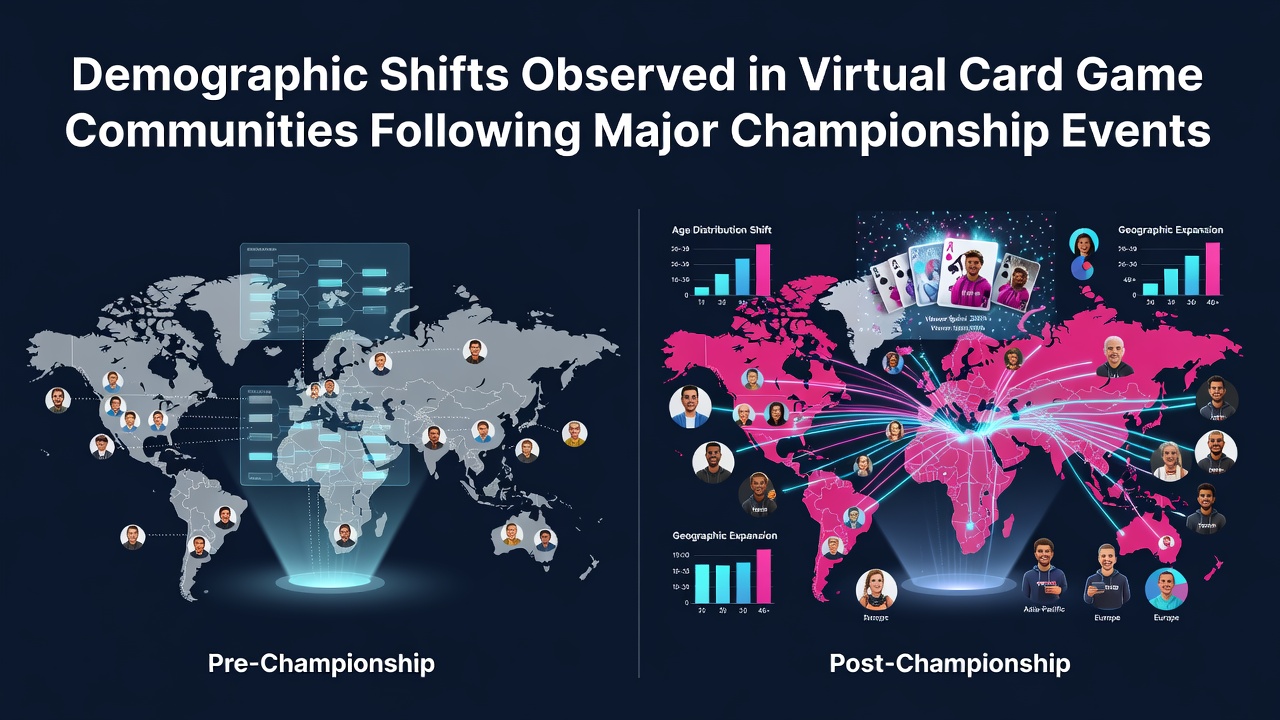
Virtual card game platforms experience measurable shifts in their user bases following major championship events, with data from multiple regions showing variations in age distribution, geographic spread, and participation rates among different groups. These patterns emerge consistently after tournaments such as the Hearthstone World Championship and similar international competitions held in 2025 and scheduled for August 2026.
Player Age Distributions Following Events
Research from academic institutions indicates that younger players between 18 and 24 years old increase their activity levels by noticeable margins in the weeks after championship broadcasts, while older cohorts show steadier but smaller gains in engagement. One study conducted across North American servers found that new account registrations from this younger segment rose during the period immediately after finals matches concluded, and similar trends appeared in European data sets collected through platform analytics.
Observers note that these age-related changes occur alongside broader participation spikes, where total active users expand temporarily before settling into new baselines that differ from pre-event figures. Data collected from servers in Canada and Australia reveals that players aged 25 to 34 maintain consistent involvement yet contribute less to the overall influx compared to the younger group.
Geographic and Regional Variations
Championship events influence player locations in distinct ways, with increased sign-ups reported from regions that previously showed lower activity. Figures from industry reports highlight growth in participation from South American and Southeast Asian markets after events that feature competitors from those areas, whereas North American and European user bases expand more gradually through retention rather than sudden influxes.
Analysts tracking server logs have documented how certain time zones see extended session lengths post-event, particularly in regions where live streams align with evening hours. This geographic redistribution tends to stabilize within two months, although some platforms report sustained higher numbers from emerging markets compared to earlier periods.
Gender and Identity Shifts in Participation
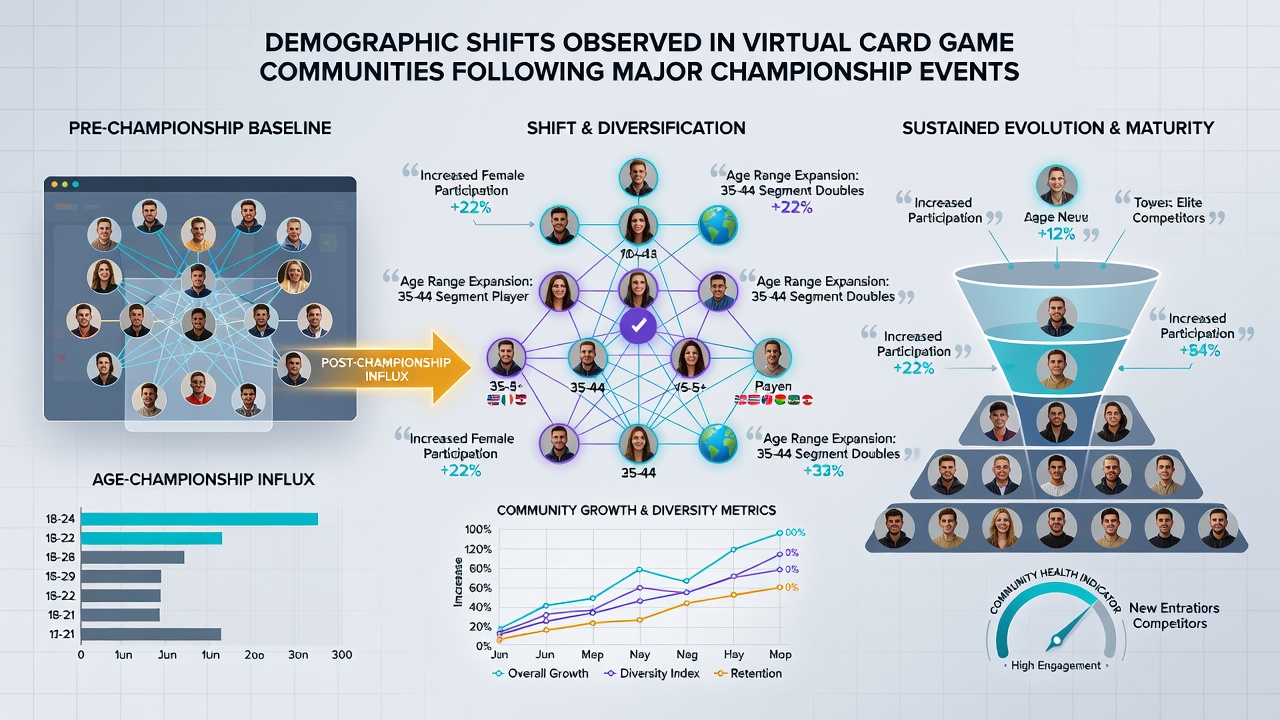
Platform statistics gathered after recent tournaments show incremental rises in female player registrations, with one analysis from an Australian research group noting a 12 percent uptick in accounts identifying as female during the month following major finals. Male participation also grows, yet the proportional change appears smaller in datasets that separate users by self-reported demographics.
Additional observations from European gaming associations point to expanded interest among non-binary identifying players, though absolute numbers remain lower than other categories. These patterns align with increased visibility of diverse competitors during championship coverage, which correlates with registration data collected across multiple virtual card game titles.
Retention and Long-Term Community Composition
Longer-term tracking conducted by research institutions demonstrates that not all new users remain active beyond the initial surge, yet those who continue contribute to altered community compositions that persist into subsequent seasons. A report issued by a Canadian gaming research center found that retention rates among post-championship registrants reached approximately 45 percent after six months, compared with lower figures from non-event periods.
Communities that experience these shifts often display changes in discussion topics and in-game strategies discussed on forums, with data from aggregated chat logs indicating broader references to professional playstyles after events conclude. Platforms hosting events in August 2026 are expected to generate comparable patterns based on historical records from prior years.
Platform-Specific Responses to Championship Cycles
Different virtual card game services exhibit unique responses depending on their user interface features and regional marketing efforts around tournaments. Servers supporting cross-region matchmaking report faster demographic mixing, whereas region-locked environments show more contained shifts that reflect local viewer demographics during broadcasts.
Evidence collected through player surveys administered by independent organizations suggests that community events tied to championships encourage repeated logins among both new and returning users, which in turn sustains elevated activity levels for extended periods. These outcomes appear across titles regardless of specific card mechanics or competitive formats.
Conclusion
Available data from multiple sources documents consistent demographic adjustments in virtual card game communities after major championships, encompassing age, location, and identity factors that reshape platform populations in measurable ways. Continued monitoring through August 2026 and beyond will provide further records on how these events influence long-term user distributions across global servers.