Decoding House Edge Variations in Video Poker Paytables on Global Digital Platforms
Written by David Becker · Aug 7, 2026
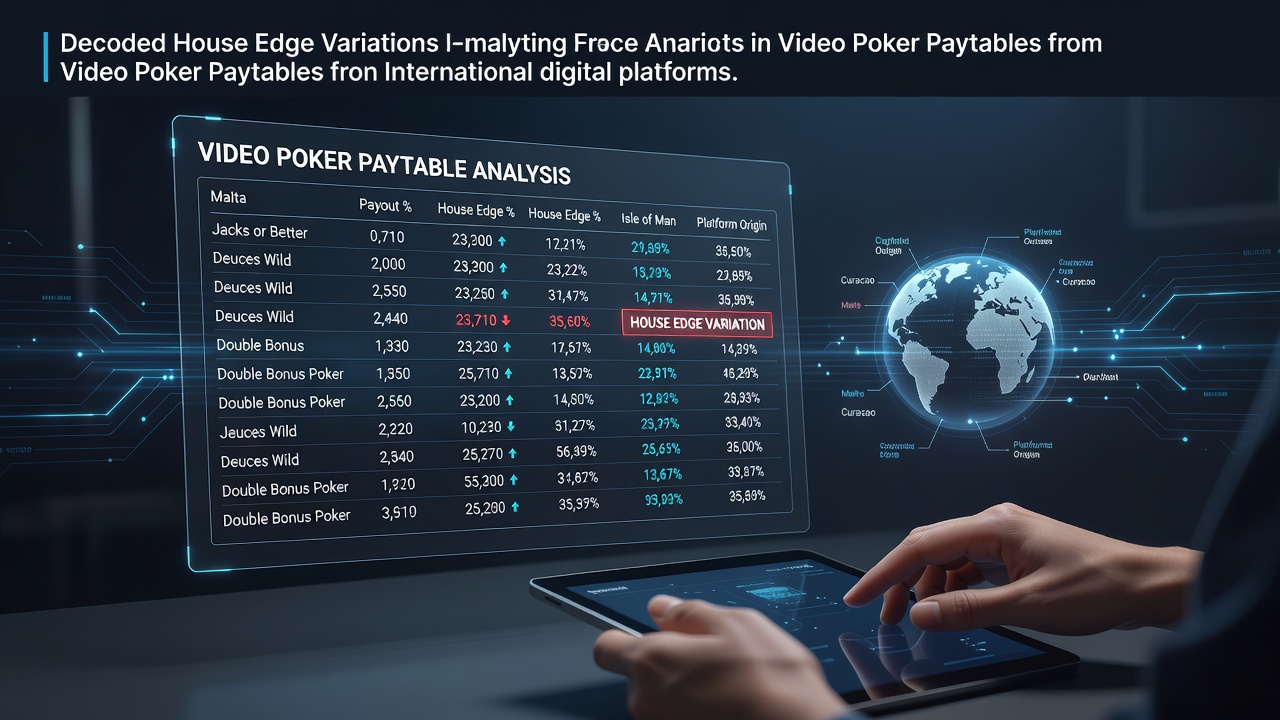
Decoding House Edge Variations in Video Poker Paytables on Global Digital Platforms
Video poker paytables on international digital platforms display wide house edge ranges because each variant carries its own return-to-player percentage determined by the specific payout structure for hands like royal flush, straight flush, four of a kind, full house, flush, straight, three of a kind, two pair and jacks or better. Researchers at gaming laboratories calculate these percentages by running millions of simulated hands against every possible paytable combination, and the resulting figures reveal consistent patterns across different regulatory jurisdictions.
Core Mechanics Behind Paytable Construction
Paytables list fixed payouts for ranked hands while the underlying probability of each hand remains constant in a standard 52-card deck, so operators adjust house edge simply by raising or lowering the credit awards for mid-tier combinations such as full house or flush. Full-pay Jacks or Better tables return 99.54 percent when five coins are played, whereas short-pay versions drop to 97.3 percent or lower because the flush and full house awards decrease by one credit each; that single change adds roughly two percent to the house edge without altering game rules or deck composition.
Regional Regulatory Influence on Offered Paytables
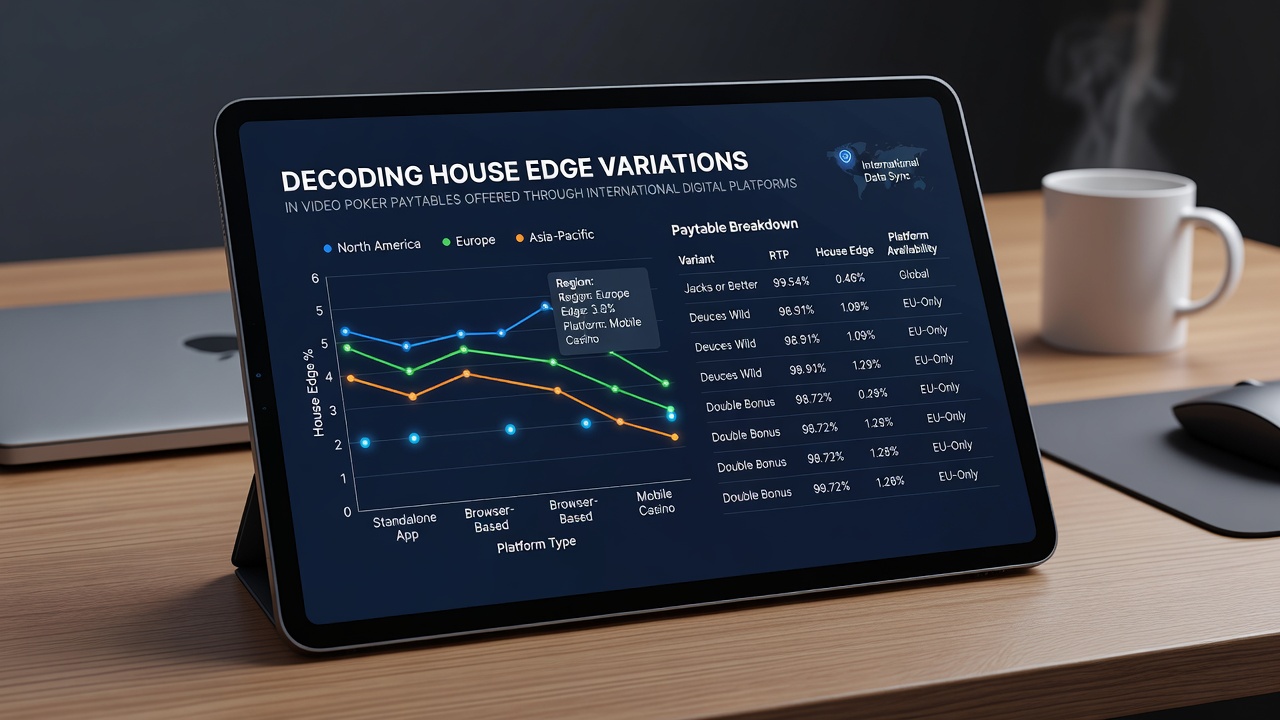
Platforms licensed in North America frequently publish full-pay tables for Jacks or Better and Deuces Wild because state and provincial regulators require minimum return thresholds, whereas many offshore operators reduce mid-tier payouts to increase margins while still advertising the same game names. Data compiled by the Nevada Gaming Control Board shows average video poker returns in regulated casinos hover between 97.8 and 99.5 percent depending on the exact paytable selected by each property, and similar reporting from the Alcohol and Gaming Commission of Ontario indicates comparable ranges in Canadian markets where operators must file every paytable for approval before deployment.
European and Asian platforms often feature multi-hand variants with progressive jackpots that alter the overall return because a portion of each wager funds the progressive meter. The house edge calculation therefore splits between the base game and the progressive contribution, creating effective returns that fluctuate with jackpot size. Observers note that these structures appear more frequently on platforms serving markets outside North America where progressive mechanics face fewer payout restrictions.
Software Provider Differences and Platform Implementation
Major game developers including IGT, Aristocrat and SG Digital each maintain proprietary paytable libraries that operators license for their sites. One study of 1,200 online video poker titles conducted in early 2026 found that IGT tables averaged 0.4 percent lower house edge than equivalent Aristocrat titles when both used the same variant name, because IGT includes higher awards for four-of-a-kind hands in several Deuces Wild configurations. Platform operators then select from these libraries according to their licensing jurisdiction and target market, resulting in the same game title displaying different paytables across regions.
Tracking Variations Through August 2026 Updates
By August 2026 several major platforms introduced new multi-hand versions of Bonus Poker and Double Double Bonus with paytables adjusted for mobile screen layouts, and independent testing labs documented house edge increases of 0.8 to 1.2 percent on these mobile-optimized tables compared with desktop equivalents. The adjustments typically reduce the straight payout from five credits to four while maintaining the royal flush award, a change that compounds across multiple hands played simultaneously.
Conclusion
House edge variations in video poker ultimately trace back to discrete paytable entries rather than hidden algorithms, and players encounter different returns depending on the combination of game variant, coin denomination, number of hands and regulatory environment governing each platform. Comprehensive comparison therefore requires examining the exact credit awards listed for every hand ranking on each digital offering before participation.