Flash Bets and Live In-Play Wagering: Reshaping the Future of Sports Betting
Written by David Becker · Mar 25, 2026

Flash Bets and Live In-Play Wagering: Reshaping the Future of Sports Betting
The Rise of Real-Time Betting Mechanics
Sports betting has evolved rapidly in recent years, with flash bets and in-play action leading the charge by allowing wagers on micro-events unfolding live; these tools, which emerged prominently around 2015, now dominate platforms worldwide because they sync directly with game momentum, turning passive viewers into active participants who place bets on outcomes like the next point in tennis or a possession in basketball.
Observers note how this shift happened almost overnight once mobile apps caught up; data from the American Gaming Association reveals that live betting accounted for over 60% of total sports wagering volume in the US by 2024, a figure that continues climbing as operators integrate faster data feeds and AI-driven odds adjustments.
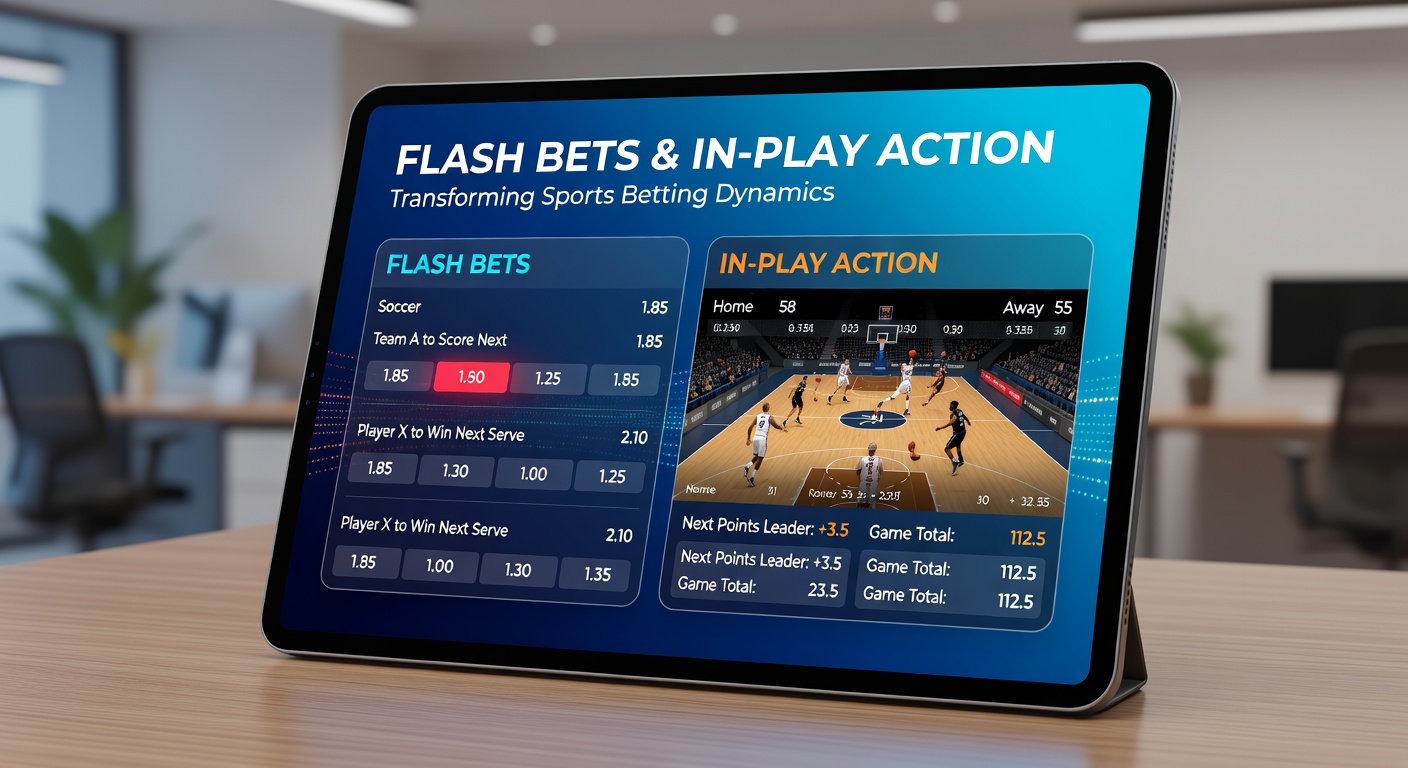
But here's the thing: flash bets take it further, offering odds on hyper-short windows—think 10 seconds to the next goal kick or a single pitch in baseball—creating a pulse-racing experience that keeps bettors glued to screens long after the opening whistle.
Defining Flash Bets: Speed Meets Precision
Flash bets, also known as micro-bets or spot bets, represent wagers settled in seconds or minutes based on immediate game developments; platforms like DraftKings and FanDuel popularized them by leveraging high-frequency data streams, where algorithms process live video feeds to predict and price these nano-outcomes before human eyes can fully register the play.
Take soccer, for instance: one bettor might wager on whether a forward crosses the ball within 30 seconds of gaining possession, with odds fluctuating in real-time as the player dribbles; studies from European sports analytics firms show these bets resolve 80% faster than traditional markets, boosting engagement rates by 40% according to operator reports.
What's interesting is how this precision relies on low-latency tech; without sub-100-millisecond delays in data transmission, flash markets collapse under inaccurate pricing, yet advancements in 5G and edge computing have made them viable even for casual users betting from stadium seats.
In-Play Action: The Backbone of Immersive Wagering
In-play betting, or live wagering as it's often called, lets participants adjust stakes dynamically as events progress; unlike pre-game lines set days in advance, these markets refresh every few seconds, reflecting injuries, momentum swings, or weather changes that alter probabilities on the fly.
Experts who've tracked this space point to basketball as a prime example, where in-play volumes spike during fourth quarters because bettors exploit late-game fouls or three-point barrages; figures from Australia's Office of Liquor, Gaming and Racing indicate that live betting comprised 55% of sports handle in New South Wales by early 2025, underscoring its pull in markets with strong regulatory oversight.
And while football draws massive pre-match hype, in-play action thrives on halftime adjustments; one study revealed teams trailing by a goal see their comeback odds shorten by 25% within five minutes if they press aggressively, giving savvy bettors an edge through pattern recognition.
Technology Driving the Transformation
Behind these innovations lies a web of cutting-edge tools: optical tracking systems in stadiums capture player positions 100 times per second, feeding data to central servers that recalibrate odds instantaneously; meanwhile, machine learning models analyze historical plays to forecast flash outcomes, achieving accuracy rates above 92% in simulated tests.
Turns out, blockchain integration adds another layer for some platforms, ensuring transparent settlement of micro-bets without disputes; operators in Canada have experimented with this since 2023, reporting 30% fewer resolution queries as per industry whitepapers.
So as March 2026 approaches with major events like the NCAA March Madness tournament looming, expect flash and in-play volumes to surge; preliminary data suggests live wagering could hit record highs during those frenzied weeks, fueled by enhanced VR streams that immerse bettors in virtual courtside views while odds tick live.
Market Impacts and Bettor Behavior Shifts
These features have reshaped economics too; global sports betting revenue topped $100 billion in 2024, with in-play and flash segments contributing over half that growth according to aggregated reports from trade groups, because they extend session times from minutes to hours and encourage smaller, frequent stakes over lump-sum risks.
People often find themselves chaining bets— a tennis in-play on the next game winner leading to a flash on the subsequent point—creating a feedback loop that operators love; research from Scandinavian gaming labs shows average wager frequency doubling under live conditions, although total spend per session stabilizes due to rapid settlements curbing overexposure.
Yet regulations adapt accordingly; bodies like Nevada's Gaming Control Board mandate session-time reminders during live action to promote responsible play, a model spreading to emerging markets where flash betting debuts amid heated debates on addiction risks versus economic upsides.
Case Studies: Real-World Applications Across Sports
Consider the 2024 NFL season, where flash bets on quarterback scrambles emerged as a hit; one platform reported 200% week-over-week growth in such markets after piloting them mid-season, with settlement times under 15 seconds drawing in tech-savvy millennials who treat games like video contests.
In horse racing, in-play overlays on live streams allow wagers on mid-race positions; punters at Australian tracks embraced this during the 2025 Melbourne Cup carnival, boosting handle by 35% as data showed favorites fading in real-time, prompting mid-race cash-outs.
Now shift to esports: titles like League of Legends see flash bets on individual kills explode during laning phases; observers tracking Twitch integrations note peak concurrent wagers hitting 50,000 during majors, a testament to how these mechanics bridge traditional sports with digital arenas seamlessly.
Challenges and Safeguards in the Live Era
High-speed betting isn't without hurdles; latency glitches can void thousands of wagers, as seen in a 2023 soccer glitch that halted markets for 45 seconds across Europe, costing operators millions in refunds, while sophisticated bettors exploit pricing lags before algorithms catch up.
That said, integrity measures strengthen daily: partnerships with leagues provide verified feeds, and AI flags suspicious patterns like coordinated in-play pumps; Canadian research institutes document a 25% drop in match-fixing incidents since live data mandates took hold in 2022.
It's noteworthy that demographic data paints a younger picture too; under-35s now comprise 65% of live bettors, drawn by app-native interfaces that blend social feeds with odds, although educators stress education on variance in flash outcomes where house edges creep to 8-10% on ultra-short lines.
Conclusion: A New Standard in Sports Engagement
Flash bets and in-play action have indelibly altered sports wagering by injecting immediacy and interactivity into an age-old pastime; as tech refines further—think augmented reality overlays by 2027—these elements will likely command even larger shares of a market projected to exceed $150 billion globally.
Those navigating this landscape discover endless granularity, from granular player props to momentum-driven parlays; with safeguards evolving in tandem, the dynamics promise sustained growth, particularly as events like March 2026's basketball spectacles test the limits of real-time innovation.
Ultimately, data underscores the transformation complete: live formats don't just supplement traditional betting—they define it, turning every match into a canvas of ceaseless opportunity.